



Maintenance & Design
Your best specialist at every machine without a flight — and a twin that remembers every failure, so upgrading the plant starts from truth instead of folklore.
AR Remote Assistance
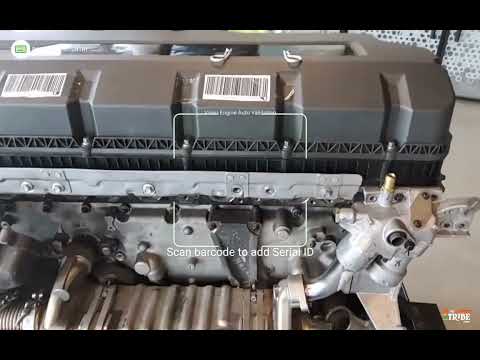
An upgrade to the video call. While the technician films the problem, the system reconstructs the space in 3D — so the expert on the other side of the world annotates in the space itself, and those marks stay anchored to the exact wire, valve, or housing they were drawn on. The fix happens in a fraction of the cost of a flight.
When a critical machine misbehaves, the choice today is a specialist's flight or a half-blind repair over a shaky phone camera.
Flying the expert costs days and thousands per trip — and offshore, a bed and a helicopter seat besides. The phone call costs accuracy: "the second valve from the left" is how mistakes get made. Anchored 3D annotation removes the ambiguity: the expert doesn't describe where — they point, in the technician's own space, and the pointer stays put.
- The technician starts a call from the machine. Phone or tablet — hardware the site already owns. No headset dependency, no special kit shipped ahead.
- The system builds the space live. As the camera moves, it reconstructs a 3D understanding of the scene — the machine, its piping, its panel — in real time.
- The expert annotates in 3D. Circles, arrows, and tags drop into the reconstructed space and lock to the physical objects. The technician moves; the annotations don't. "This terminal. This fastener. In this order."
- The fix proceeds systematically. Step by step, with the expert seeing exactly what the technician sees, thermal and detail shots on demand, and every annotation persisting through the job.
- The session becomes a record. Captured, timestamped, and filed — the diagnosis and the repair, reusable the next time this failure mode appears anywhere in the fleet.
- 2 a.m. compressor trips — the machinery specialist is present in minutes, not after the next available flight.
- OEM support without the visit — vendor experts walk site technicians through warranty work with anchored precision, no travel invoice attached.
- Offshore & remote assets — where every visiting body costs a bed, a seat, and a survival cert, presence-without-travel changes the economics entirely.
- Turnaround surge support — scarce specialists cover multiple crews across sites in a single shift.

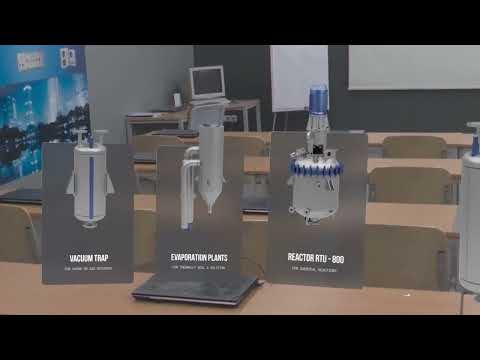
The AR layer on a video call. Live 3D reconstruction of the technician's space, with annotations that anchor to real equipment.

A real remote-assistance call, end to end. Fault to fix — expert and technician working the same space from different continents.
The Living Twin: Diagnosis, Redesign & Upgrade
The twin your people trained on grows up. We load it with the asset's full history — every work order, every failure, every fix — and put AI on top: helping diagnose what's wrong, propose upgrades, and redesign or re-plan the space inside the twin itself. One capture, three lives: train, maintain, redesign.
"Has this pump done this before?" is answered today by a retired inspector's memory, a binder, or a message thread — and redesigns start from drawings that stopped matching the plant years ago.
Both problems have the same root: the plant's knowledge and the plant's geometry live apart from each other and from the people who need them. The living twin fuses them — the photoreal space, the equipment data, and the maintenance history in one place an engineer can stand inside and an AI can reason over.
- The training twin becomes the record of truth. The same capture from 1.2 — already paid for — is enriched with asset tags, documents, and the full issue history from your maintenance systems.
- AI reasons over the history. Ask it, in plain language, at the machine or at a desk: this failure mode, on this model — what's the pattern, what fixed it, which work orders say so? Answers arrive with sources, inside your own cloud tenancy, respecting your permissions. Where the record is silent, it says so.
- Diagnosis happens in context. Symptoms, sensor trends, and history are examined in the twin — on a screen, on the immersive lab walls, or in a shared spatial session with specialists dialed in from anywhere.
- Redesign happens against reality. New elements are placed and clash-checked against the captured space — not against a drawing's memory of it. Access, reach, and maintainability get judged at full scale before anything is fabricated. Legacy drawings feed in too: modern vision AI extracts the bulk of a P&ID set automatically, with every element human-verified.
- The loop closes. Every completed job, every modification, every re-scan refreshes the twin — so the next diagnosis and the next upgrade start from today's truth, not last decade's.
- Fleet-wide failure patterns — the AI surfaces that this seal fails the same way at three sites, before the fourth finds out the hard way.
- Brownfield upgrades — new skids and routing designed inside the scan; the flange never meets the cable tray, because the cable tray was in the model.
- Knowledge that outlives careers — retiring experts' judgment captured into the twin's memory instead of walking out the gate.
Learn the place
Crews master the real unit — its geography, hazards, and procedures — inside the twin, before day one.
Ask the place
History-aware AI diagnosis, in context, with sources — at the machine or in the lab.
Change the place
Upgrades placed and proven against captured reality — errors surface in pixels, not steel.